Thursday, November 25, 2010

re-filming cowboys

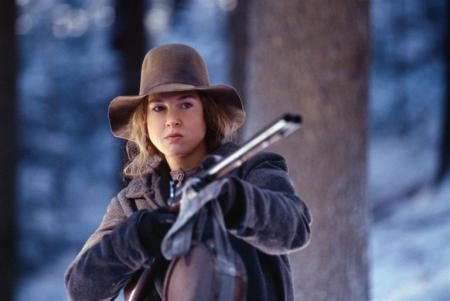
I nearly had a heart attack after opening my blog this morning and thinking I hadn't written about violence for like a whole post (but of course I had: the picture of Renee Zellweger holding a gun alerted me to this.) I think it was that I hadn't written about actual full-on crime violence, cowboys or Buffy for like a whole post.

BUT thankfully over the weekend I watched Once Upon A Time in the West, a 1968 film directed by the king of spaghetti westerns, Sergio Leone. Like most of his films, I spent the first hour trying to work out which cowboy was which (there were three main ones, each with their lackeys, and they all look kind of the same and sound the same and shoot people, and some of them were pretending to be other ones. So it's this whole confusing thing).

But it was such a joy to watch, for three main reasons:

1. The cinematography. waahhh there just aren't words. It was beautiful: not just because of the amazing desert landscape, but also the facial-close ups (kind of making the face a landscape to written onto as well). For example:
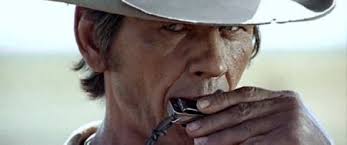


The cowboys always fill the screen, even if, like the second screenshot above, the desert actually takes up more space. Sergio Leone is known as one of the first directors to make 'films-about-films' and Once Upon a Time in the West is a type of meta-western, simultaneously an homage to, and reworking of, the American western TV shows that were very popular in the early 60s. That every shot seems overwhelmed by men - and men who almost all die - perhaps signifies the impossibility of American TV cowboy ideology (the glorification of the frontier, expansion, violence, etc) actually surviving (or perhaps that Leone thought it should be 'killed off').

2. The story line. SO COMPLEX! I mean seriously, it was almost unnecessarily full of red herrings. But this was the great thing about it - it was not predictable at all and defied the Western fomulae that had, till this point, been assumed. For example, the three cowboys in the opening scene (shown in the bottom right screenshot above) are actually actors that have previously been cast as successfully violent cowboys in early American Westerns. They all get shot within the first five minutes and you realise: this film is about breaking down the stereotype. These men that who have committed violence in the name of America will be brought down. Ironically, it is another lone, American cowboy who shoots them. Here we see the cowboy at once vilified and exonerated (but I haven't thought about this enough to provide an interpretation yet).
          Leone provides a plethora of characters (the three cowboys - Harmonica, Frank and Cheyenne, a robber-baron, a young beautiful widow, and some other side characters) to mix and intermingle so many typical western storylines that it's hard to know what the film was actually about, or to articulate its plot. But I think this was intentional. Leone seems to have brought all these familiar storylines together in a way that is quite difficult to interpret, so that any reigning, America-focused narrative becomes not only impossible to read, but in fact absent.

Cardinale as Jill McBain
3. Claudia Cardinale (the actress who played the young gorgeous widow, Jill McBain). What a ROBOBABE! She is considered the first so-called "complex" female character in a Western: she arrives in town, a young wife, to find her husband and his children shot by Frank, who wants the McBain land. All three cowboys visit her a various times to try and find what was so valuable about the property (which, as it turns out, was the fact it had water on it and was right by the railway). She relates to these cowboys without fear, claiming to not even fear rape, because even if all the men had their way with her, she wouldn't be dead. Later, when Frank does try to rape her, she sleeps with him willingly so as not to be killed. She is then revealed to be a prostitute from New Orleans who fell in love with the land-owner McBain and decided to move to his ranch. The fact she is a prostitute explains her lack of fear about putting forth her body in order to survive, but complicates her role as lady-of-the-house. She is a whore who is respected by the cowboys simply because she is beautiful, and sexually beautiful. The fact she is prostitute means she is not the type of untouchable, Southern Belle that Nicole Kidman was in Cold Mountain, but an accessible woman whose beauty and body is available to men.
          Cheyenne, at the end of the film, says to her: "You know what? If I was you, I'd go down there and give those boys a drink. Can't imagine how happy it makes a man to see a woman like you. Just to look at her. And if one of them should pat your behind, just make believe it's nothing. They earned it." I mean, excuse me? I know, I know, it was '68 and '70 feminism hadn't quite made headways but STILL! "They earned it?" Who writes that? And the thing is, Jill does walk contentedly out into the midst of the workmen, bringing them water, like some sort of eternal female figure, a whore providing life-giving nourishment. Jill's character may have been complex but her objectification is portrayed as natural, and in fact, somehow good and life-giving. Gross. But, I guess women in Westerns had to start somewhere, right?

There are so many other great things about the film - the soundtrack, for one. Also it's clear Tarantino has watched this film about a gazillion times, the music, the cowboys, the stand-offs, the deliberate dialogue have pretty much just been inserted into the Kill Bills. But everyone should watch Once Upon a Time in the West. It will make everyone want to move to California and everyone want to marry a cowboy (even if you're a man. Trust me they're amazing).

Monday, November 22, 2010

Cold Mountain: not as cold as edinburgh.

Ok so normally I can’t stand Jude Law (ESPECIALLY in The Holiday, I mean WHAT is the with the fake tan? You live in England, and it’s SNOWING. And you’re cast as Kate Winslet’s BROTHER. In what way is a tan convincing?) But I did kind of warm to him in Cold Mountain, I think it was the fact he barely spoke a word, and played very convincingly the social awkwardness that comes with professing your love to someone before you know them properly, then being re-united with them years later after a war and wondering how to act and treat them. Which, basically, is the story of Ada (Nicole Kidman) and Inman (Jude Law) in Cold Mountain.

Renee as Ruby
What I liked even more than Jude Law was the relationship between Ada and the girl who comes to help her manage her farm once her father’s died and Inman has gone to war. The girl is Ruby, played by Renee Zellweger, a young girl abandoned by her father who knows everything there is to know about growing crops, building fences, baking pies, and finding her way around the nearby mountains. When Ruby first arrives, she finds Ada dying of starvation due to her inability to do anything (including grow food), inability to make money (she’s a ‘lady,’ she doesn't work!) and her pride, which means she is too ashamed to continue relying on other’s charity. As Ada cries when Ruby first arrives,

I can talk about farming in Latin. I can read French. I can lace up a corset, God knows. I can name the principal rivers in Europe, just don't ask me to name one stream in this county! I can embroider but I can't darn! I can arrange cut flowers but I can't grow them!

But within a few short months, Ruby has transformed Ada from profoundly useless Southern Belle to hardy, herb-growing, fence-building, pie-baking, not-starving lady-now-mountain-girl. Ada can repay her neighbours’ charity by cooking them food. She can protect her and Ruby’s friends, (deserters from the army) with a shotgun that she has learnt to shoot. In losing her role as lady, Ada gains the ability to survive as a woman dependent only on herself and other women.

What is most interesting about this transformation is that Ada arrives in Cold Mountain as the  traditional, beautiful Southern Belle – but one physically trapped by this position, not just by her corset, but by her lack of skills which force her into poverty once she is away from the money and society of men. It is only in shunning her role as lady that Ada is able to regain pride in herself, can participate in social transaction without shame (by baking food for her neighbours as payment) and gains a friend. This does come at some cost, though – for while her father’s death, a symbolic death of the patriarch, creates the space for Ruby to enter the father’s house and transform his daughter, Ada still experiences grief at this loss. She must also sell her beloved piano – the one thing of her old life that she loves and is good at – to have enough money to survive one particularly cold winter.

The doomed couple.
The other main cost is her loss of Inman. She does remain dependent on his memory and the possibility he will return, to get through difficult times. Initially, I felt uncomfortable about this because I felt it undermined the feminine independence she develops with Ruby. However, when Inman does finally return, years down the track, it’s actually not too clichéd. They don’t run to each other and make out. She nearly shoots him, then realizes who it is, and then they have an awkward conversation about how strange it is too see each other. (Then of course they get over it, hook up overnight in a mountain shack, and then he gets shot the following day protecting them from the City Guard. And of course she got pregnant from the one night they spent together and it’s the whole romantically tragic thing. But anyway).

While this ending was a bit predictable and attempted to pull every heartstring the audience had (admittedly, I cried LOTS) it does point to something quite profound: Inman’s return without death was actually an impossibility. This type of transformed, independent woman cannot exist with the providing husband on her arm. Ruby, on the other hand, who grew up with survival skills and who effectively taught herself  independence, can get married (and does). Ada’s narrative seems suggest that there is something about the act of shedding an old feminine role, or the act of removing a stereotype cast upon you, which inevitably involves loss, and probably some sort of masculine loss. It is this loss which catalyses Ada's transformation. Hence, Inman needs to die for Ada to remain who she has become, while Ruby can marry and have children because she has not has to “shed” anything: she is a type of independent woman who can choose a man without needing to revert to dependence on him.

Or something like that, anyway. Maybe I’ve been WAAAAY too sucked in by Hollywood, but as you know, I always am! Because it’s FREAKING COLD in Edinburgh right, and much nicer to stay inside watching and fantasizing about Hollywood that go outside in the rain. (But I still love Edinburgh. Don’t get me wrong).

Monday, October 11, 2010

the deaths of Dean Winchester et al

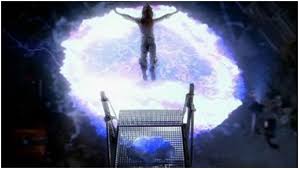
So whilst procrastinating I am watching Supernatural season 4. As much as everyone knows that Dean Winchester is the best thing that ever happened to sci fi TV (in fact, the best thing that ever happened to television in general, and potentially the best thing that ever happened to the entire world) what's with him dying, going to hell and being brought back to  life? The storyline shamelessly replicates Buffy seasons 3 AND 6, where Angel comes back from hell and Buffy comes back from heaven respectively. I'm getting tired of shows killing off main characters for dramatic effect and then bringing them back to life under mysterious circumstances so that the next 20 episodes can be spent determining "why they got brought back" which, inevitably, is because some cosmic superpower "has more work for them to do."

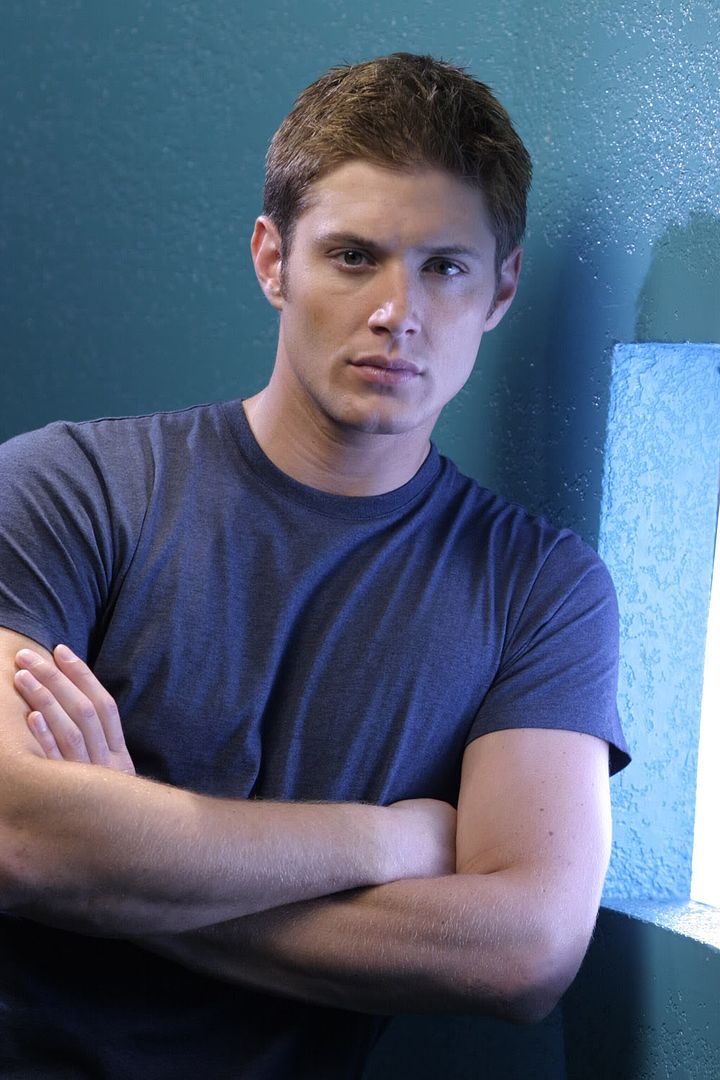
In Supernatural's defense, they had to bring Dean back because even the fictional death of the actor that plays him, Jensen Ackles, is a travesty to humankind that should never have to be faced by any living soul. The producers of cyber-punk sci-fi series Dark Angel obviously knew this too, because after Ackle's death as character Ben in Season 1, they brought him back as new character Alec in Season 2 (conveniently, Ben and Alec are genetically enhanced superhumans who share the same DNA, so were plausibly identical).

And of course EVERYONE who has watched any Buffy at all knows that Dawn should've died instead of Buffy at the end of Season 5 (anyone who says otherwise should have their TV taken away from them NOW). Angel coming back was alright, because I liked him. And his death really was moving, I still cry every time.

Some more acceptable instances of characters being ostensibly killed off and then brought back are
       - Han Solo coming out of his carbon freeze (Star Wars)
       - Westly revealing himself as the Dread Pirate Roberts (Princess Bride)
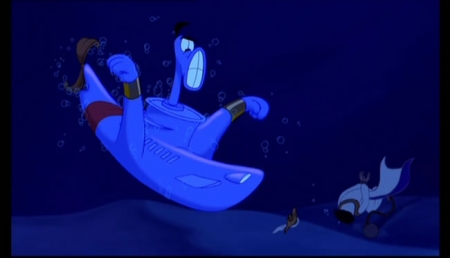
       - Aladdin nearly drowning and the Genie turning into a giant submarine and bothering to make
         siren noises before rescuing him (how hilarious is this by the way).
       - Jeremy having his neck broken by Damon but being protected by his magic ring (whoo
         hooo!!! Vampire Diaries s2 episode 1! Just started screeing in UK!)

Now I have to back to real study and write about Cormac McCarthy's '79 novel Suttree, in which lots of people die but no-one comes back. It's a bit more depressing really.

Dean Winchester, human extrodinaire
Buffy sacrificing herself for her sister Dawn, Buffy s5

Submarine Genie rescues Al.

Thursday, September 30, 2010

This is England: three years on


This Is England ’86, the televised mini-series and sequel to Shane Meadow’s film This is England (2006) has just screened in the UK. It's set three years after the film took place and stars all the same actors, who are just a bit taller and have different sections of their heads shaved, and more scars (thanks to all the beatings they took in the film’s world of 1983). In Episode 3, the focus was not on skinheads and racial tension, but sexual tension, and how to negotiate sex in a world where most people get they want through violence, and anyone who tries otherwise just ends up hurting their friends anyway.
      Shaun, for example, leaves home when he catches him mum in the act with her new boyfriend: something he can’t quite forgive in memory of his dead father. He spends the episode working through how he feels with Smell, who eventually convinces him that all women have needs and he should give his mum a break. Lol sleeps with, Milky, who is the best friend of Woody, her ex, and Milky spends the ep working out whether he values his new relationship with Lol over his friendship with the lonely and dejected Woody.
      Three-quarters of the way through the episode, I was enjoying it, but felt a bit let down because it didn’t seem to have the same devastating tone that the film did. Shaun admitting his mum can have a boyfriend doesn’t seem to compare to skinhead Combo bashing the shizola out of black Milky on the big screen, especially when all the ads leading to the sequel’s screening were full of seemingly heartbreaking scenes to a backdrop of moving piano music.
      Until: the rape scene. An absolutely shattering rape scene, perhaps the most powerful I’ve ever seen. Mick (Lol’s dad) rapes the teenage girl Trev in his lounge room, and it’s violent, and graphic, and she is utterly helpless against the strong, grown man who almost strangles her in the attempt to hold her down. But it's also clumsy and slow, and on an old couch while the TV's on. An awful act in the middle of suburban normality.
      Although still reeling from it, I appreciated this rape scene because it was real, ie. it did not come across as a plot device to explore power structures and dynamics; it was not a metaphor (for example, for patriarchal racist England colonising and policing against the racial/gendered other) it simply said: look. This is real. And it happens while all her friends are at the pub watching the footy, it happens while her friends are negotiating sleeping with their ex’s best friend, and it happens with a man that she knows. It happens in real life while the rest of us are distracted with our normal lives.
      Viewers were initially outraged, but shortly changed their tune. To quote some tweeters, “‘The last ten minutes of This Is England '86 was horrific. But I'm glad they had the b*lls not to gloss over the horror of the situation,' was how one tweet encompassed the sentiment, backed up by another: 'Tough stuff to end with but had to be done. This sort of thing goes on right now somewhere.'” (1)
      I agree. And in all honesty I appreciated the innocuous conversations  between Shaun and his mum by the end of the episode – I think it was just the producers being gentle with their audience.


Wednesday, September 8, 2010

Flying with De Niro: How "Heat" got me thinking


I obviously had only one choice on the 25-hour flight towards Edinburgh: stay awake and watch as many action movies as possible. Unfortunately, I only got through five before I passed out from tiredness and overeating (Qatar Airways definitely don’t skimp on the food). I started out with Heat (dir. Michael Mann, 1995) not realising I’d already seen it – but the rewatching got me thinking about the gender dynamics of action cinema and in particular, heist-films.

Pacino as Lt. Hanna
Heat is a story about two men, how they work, what they might prioritise, and the personal cost associated with these prioritisations. McCauley (Robert De Niro) is a high-profile thief and heist-master; Lt. Hanna (Al Pacino) is a jaded yet relentless cop obsessed with catching McCauley. The film is basically an exploration of what happens when you live by McCauley’s motto, “Do not have any attachments, do not have anything in your life you are not willing to walk out on in 30 seconds flat if you spot the heat around the corner.” Both McCauley and Hanna are willing to walk out on relationships to  respectively avoid getting arrested/catch the bad guy. By "relationships", I mean both friendships with other men (and potentially each other) and also with women. McCauley walks out on a life of companionship with the sweet Eadie, who stays with him even after discovering he is a criminal, and Hanna walks out on his wife Justine and his stepdaughter, Lauren, who he has a soft sport for.

Even though Heat is not predictable and keeps you on the edge of your seat, the plot is not that surprising once it pans out. Experience tells us that thieves in heist-films usually end up with the girl and/or the prize (think The Italian Job, Inside Man, National Treasure, Gone in 60 Seconds, Ocean’s 11) as they are usually told from the thieves’ perspective, and we like seeing them stick it to the man. The alternative is we see it from the cop’s perspective and want to see justice done, so the thieves end up dead and the cop gets the girl (think Point Break, and all James Bond films). Heat’s originality lies in the fact we end up sympathetic to both cop and thief, wanting both to succeed, but also thinking the two of them are somewhat selfish, blinkered men who can’t see what’s important in life. Because McCauley and Hanna essentially lead the same life despite being on different sides of the law, it’s no wonder they both die: McCauley literally, as he is shot, and Hanna figuratively, as he has given up his family and just shot the one man who understood him and who, in a way, respected him.

Heat is a clever exploration of the heist protagonist and antagonist, deals effectively with moral ambiguity, and demonstrates the personal cost of McCauley and Hanna’s choices in a relatively moving way. However: what the heck happened to the women?

Justine, Eadie, Lauren: three women whose actions and presence are the main catalysts for the dilemmas Hanna and McCauley find themselves in, and yet they are written out of the story without so much as a backward glance. The final cut of Lauren is her bloodied body after she tries to commit suicide; the final shot of Justine is her trying not to cry as Hanna has just left their marriage for good; the final shot of Eadie is her bewildered face as McCauley walks out on her without explanation. The film ends with the chase between Hanna and McCauley and you get the impression that the women’s lives are merely the collateral damage of a boys’ club which deals with the “real” issues of life, such as thievery and justice.

But how do these women go about piecing their lives back together? How have they been affected by the actions of the men in their lives? Eadie, already suffering from chronic loneliness, surely lost all faith in all relationships after seeing McCauley walk away from her. Lauren just tried to kill herself and will wake up to find that her stepfather, the one person who vaguely cared for her, is gone. These are significant issues but there is no set of films that deal with what is going on.

Ashley Judd as self-sacrificial Charlene
I don’t mean to criticize Heat or suggest it should’ve been different. It’s important to explore the complexities of masculine cinematic roles and Heat does this well, and it certainly doesn’t endorse McCauley and Hanna’s treatment of women (more reveals it as a grim reality). Besides, Eadie, Justine and Lauren are in no way portrayed as weak or subservient – they are strong, bold and not afraid to stand up for themselves. In fact the character I admired most was Charlene (the wife of Chris, McCauley’s crime partner) who was the only person to actually take a risk and make a sacrifice for the person whom she loved (arguably she put her kid at risk in the choices she made, but the principal remains that she was the only character in the entire film to not put herself first). My point, though, in raising the Justines, Eadies and Laurens of the heist genre is that there is no archetypal narrative trajectory for these women: we simply don’t know what happens to them.

In defence of action cinema (one of my true loves) the genre has actually done a lot for women. The role of the gun-fighting, fist-fighting female is now common (though sometimes over-sexualized – but that is a another discussion altogether). This woman may be a reasonably 2D character (like Scarlett Johansson’s character in Iron Man 2) or a complex one (think Uma in the Kill Bills, Sigourney Weaver in Aliens, and to take it back to my faves, Princess Leia and Buffy). These may not be heist films per se, but you get the drift. 2D or 3D, these representations have been seminal in the development of female characterisation in cinema. What we rarely see, though, is what happens to the wives, the girlfriends, those who have been dropped when the heat’s around the corner. Romantic-drama The Time Traveller’s Wife deals with this to an extent (and actually the family-action flick Hancock through Charlize Theron’s character does quite a job of it). But I wish there more! Justine and Charlene were so interesting and drove the whole storyline – it’s such a travesty that these bold women have been ignored, when we know (mostly) what happens to any male character – even the periphery ones – in any heist film (they get the money, get the girl, or die and lose the girl).
To be honest I think feminists have had so much to say about cinema for so long because the archetypal trajectory for females in heist films is one where women get written out of stories – it is by nature problematic. However: never a fan of “victim” feminism, I will end by saying that the Justines, Eadies and Laurens of cinema have an important place in films like Heat, though films like Heat shouldn't dictate the representation of women in action films. Also, maybe I should give myself a kick up the bum and write some stories about these female characters myself, instead of complaining that no-one else has!

NB. Regarding Hancock, was anyone else mildly nauseated by (and yet strangely appreciative of) Charlize Theron’s eyeliner and low-cutted-ness once she became all hardcore and powery? Part of the feminist in me wishes they’d kept her all pretty and house-wife-like – the other part just thinks that all chicks should wear that outfit, all the time.

Tuesday, August 31, 2010

some brief announcements

I DON'T WANT TO BECOME ONE OF THOSE PEOPLE WHOSE BLOG TURNS INTO A RANT ABOUT THEIR IDIOSYNCRATIC SCI-FI OBSESSIONS AND PETS. 


So I thought I would mention...

...that I had my very first photo publication last month in TMA (The Melbourne Anglican, for those who don’t read Christian denominational newspapers). It was of the kids at my mum’s church who have recently built a veggie garden on site…in an article written by my mum about said kids and veggie garden. Sure, I wasn’t credited for the pic (and for some reason there was also another picture in the article which was not taken by me, and in fact was of a woman who wasn’t my mum, with kids we’ve never met – this has led to some confusion in church circles of the existence of another woman with the same name as my mum in the same suburb who works with kids) but hey at least it’s out there.


But since I'm so busy and really want to post...

In line with my recent Star Wars theme, does anyone else see a vague resemblance between Yoda and my cat? I actually considered starting a Star Wars Blog called Lando Tullrisian, but as my brother and dad pointed out this has been done to deathstar (by the Lego Star Wars Club, eg). So please indulge me as I regularly insert such things into my pseudo-literature blog aka crime TV blog. Thanks.

 
PS I'll write a real post soon. When I get to Scotland. Maybe before. I don't know really.

Thursday, August 12, 2010

Ellen Page films etc

So I’ve been sick all week and thankfully my cousin from Scotland is here to help me overeat brownies and complete the ‘Colossus’ crossword in the Women’s Weekly without a thesaurus. The other thing we did was hire out Juno and Whip It and watch them in succession (with a 20 minute break in-between to bake cornflake cookies). As it turns out, Ellen Page is quite the talented actress. Having recently seen Inception too, I’m kind of into this tiny pale-skinned girl who manages to still look good with messy hair, oversized jeans and flannel shirt – her costume in all three films, pretty much.

EP in Whip It
In some ways, Juno and Whip It are the same film. Girl-in-small-town surprises parents-who-love-her with bombshell (pregnancy/roller derby respectively) and family makes their way through aftermath with fights, tears, swearing and hugs. Girl goes through difficult life lessons. Has fight with boyfriend/best friend. Girl gets wise words from parent/older friend, eats humble pie, apologises and VOILA: girl has baby successfully/takes part in roller derby successfully, and everyone’s a winner even though the proposed adoptive dad of the baby turns out to be sleaze bag, and the derby team comes in second in the championship. Substitute Juno’s cute acoustic soundtrack with Whip It’s cute girl-punk soundtrack and there ain’t a whole lot of difference in terms of overarching story arc. In fact there is nothing particularly new about this story arc at all: girls come-of-age through similar plot lines in a) Clueless, b) Mean Girls, c) Buffy the Vampire Slayer, d) Labyrinth, e) Degrassi High and f) the Saddle Club (books and ABC series).
And yet: Juno and Whip It still seem original. Neither of them stray far from the template (and everyone loves a template, otherwise we wouldn’t cry every time we see Frodo realises what a jerk he’s been to Sam) but the catalysts they use for exploring the template – teen pregnancy, and roller derby – are reasonably unique and till now unaddressed in the teen flick genre.

Whip It is a little more templatey than the June-dog – it contains a bunch of speedy and unexplainable plot turns (Bliss just happens to be in Austin and see a derby team in a store and just happens to sneak off to Austin to watch them and just happens to be a great skater even though she hasn’t skated for years and just happens to get immediately accepted into the team). But these things are forgivable because the film isn’t primarily about roller derby – it’s about Bliss realising how much her mum loves her, how much she loves her mum, the importance of doing what you love but the importance of communicating and respecting those who have sacrificed a lot for your happiness. This heart of the story is expressed so effectively (I cried both times) that the film can be excused for not wholly focussing on the feminist undertones of roller derby and the real ins and outs of the sport.

EP as pregnant gal.
Juno skims over some details too (6 months of pregnancy go by a little too quickly – and where the heck does Michael Sera get to? He totally appears conveniently when Juno is ready to crack it with life and then again when she’s ready to apologise) but where Whip It sacrifices some storyline for the sake of the template, Juno keeps the template and manages to engage a little more comprehensively with the issue at hand. Teen pregnancy is rarely addressed so positively in films – in Juno, abortion is barely an option, the parents are hugely supportive, and the 16 year old is the one who makes all the decisions – by herself – about the future of her baby. And through this Juno learns her coming-of-age life lessons about trusting people, the importance of being valued for who you are, and the importance of seeing other people for who they really are.

Aww! So warm and fuzzy, the both of them. I won’t get started on Inception but let me just say Ellz does an awesome job at breaking down the male protagonist’s ego – literally! Freud is probs turning in his grave. But it's all about helping Leo become the man he wants to be. So she gets a go at helping others learn life lessons…all part of the great circle of life.

Monday, August 2, 2010

why I would like to move to California one day

It's not just so I could get away with bleached hair and a fake tan all of the time, but because of this house situated in the Bayside Area:

Which may or may not look similar to this house:


Which is where Luke Skywalker grew up. As Anthony Kiedis once sang about the great sunny state, "Alderan's not far away." Califabulous.


Saturday, July 31, 2010

some fun things

At first I was like, "it's time for a fun post not about dead bodies for once in my life, maybe I should write about Jane Austen" until I saw this-


- and got over it. Plus it would go really well with my other favourite two actions figures!

Faith from Buffy
Self-explanatory - and with 'glide action'.
                                                            
No pun intended with Faith's name, PS. Anyway then I realised that the last two books I read were Rupert Thomson's Book of Revelation (story of a man who gets kidnapped, raped and tortured by a group of women and then attempts to piece his life back together) and Corman McCarthy's Blood Meridian (yep, you guessed it, a story of brutal cowboys who gauge each others' eyes and brains out with broken whiskey bottles or their bare hands). Moral is, I don't have much to talk about except dead bodies these days.

The other reasonably exciting thing I remembered this morning watching Dexter was that I took this photo at my friend's beach house kitchen:

real knives.

Totes looks exactly like Dexter's knife case! Now that I feel kinda disturbed that I got excited about finding knives that resembled a serial killers, I'm over and out. I just found a musty and leatherbound copy of Agatha Christie's Nemesis and hope to Miss Marple it up later this afternoon. Hopefully this will soon give more of a female flavour to the masculine/blood/corpse-infused haze that seems to have settled over this blog. Bye!

Monday, July 26, 2010

"Child of God" - Part 2

In my last post, I said that Lester Ballard, murderous antagonist of Cormac McCarthy’s 1973 novel Child of God, “represented the true nature of the cowboy. McCarthy is critiquing the heroic tradition of the South/Western male: this man is alone, is a destroyer, cannot reproduce sexually for he is attracted only to the dead, with no desire to relate to the living except through violence.”

While I think this still holds, I neglected to explain that McCarthy seems to actually be making a broader comment on the utter degradation of humanity as a whole. Which probably seemed obvious to anyone who read my summary of the novel’s plotline. However! For the sake of self-indulgence I’m going to tell you about the interesting connection formed in my brain last Sunday at church listening to sermon on the sixth commandment, “you shall not murder” (Exod 20:13). Basically, the sermon linked the commandment to Matthew 5:21-22, where Jesus explains that anyone who has hated or been angry with another person is essentially guilty of murder, in the sense that God looks at our hearts and motivations, not just our actions. Obviously, we’re not all actually murderers but the point is that “normal” people have in them the emotional seeds that drive some people to murder, and we should be working on how we treat people in our thoughts and seeking to care for people, not inwardly resent or hate them etc.

Anyway: I think Child of God (as suggested by its not-so-subtle title) actually reflects the inner workings of the “normal” person’s heart and mind through the character of a murderer. Lester Ballard is the literal representation of what Matt 5 is talking about. Ballard is even described as a “child of God much like yourself perhaps" (McCarthy, 4) – he is the everyman (or woman), and while not everyone shoots people and sleeps with the corpses, the novel suggests they are capable of using and abusing other people to similar extent (like the medical students I mentioned in my previous post).

In summary I find Child of God a very powerful and accurate illustration of the biblical idea of sin – while sin manifests in different ways through different people, it can often looks very similar internally. The parallel between Bible and novel is not complete in this case, though, as what Child of God doesn’t do is explore ideas of hope, redemption or forgiveness as much as it does degradation. McCarthy does address these issues in other novels like The Road, I think, but I will discuss this at a later date. (Thankfully the conclusion to the sermon was way more uplifting than that of McCarthy’s novel and focussed on God’s mercy, forgiveness and hope and was actually a huge encouragement to treat people better, rather than revealing humanity’s hopelessness as absolute. Not that I think McCarthy actually does see the hopelessness he depicts as absolute, but that comes through in novels other than Child of God). I think this post pretty much repeated the last, but isn’t biblical and fictional intertextuality totally fascinating, particular when it’s unclear what the fictional author actually thinks of God? Okay bye!