Tuesday, December 18, 2012

My 2012 reading year

I read many books by female authors this year – more than I did books by male authors – without even realising. Which is great. Because if you’ve been following literary conversations in Australia or around the world over the past year or so, you’ll know that there has been much debate and action around the fact that women remain underrepresented in the publishing industry: books by women writers are reviewed less frequently than those by men, and the reviewers themselves are more likely to be male, for example (see Sophie Cunningham’s great article about the whole ordeal here).

Two of the best books penned by women I read during 2012 were Blue Nights by Joan Didion and I Was Told There’d Be Cake by Sloane Crosley. Both had been recommended to me by a number of sources, and I finally got my hands on them after the Melbourne International Writers Festival. Reading Blue Nights was a revelation: how have I lived – particularly as a non-fiction writer – without having read Didion’s work before? I felt like I’d found some kind of soul-mate, or at least, felt as though my desire to become a writer had been replaced with a desire to become Didion herself. Sharp prose, but easy and honest prose: she writes so simply, as if all the words just fell out of her brain onto the page in perfect order. The dumbest of asses could read her work and come away with the most profound understandings of how people and the world work: not because she isn't incredibly complex, but she's so articulate. I even became jealous reading other writers’ glowing reviews of her – I wanted her writing to be mine!

Reading Crosley was also inspiring. Her book of essays about life in New York City was so hilarious I had to stop reading it in publicly, because it made me snort and cry with laughter at once. The best thing about it was it was written by a girl about my age who I could relate to. Her stories are the kind that get told at a dinner party and have the whole group in stitches. But she’s clever, too – all the hilarity is interspersed with reflection on her Jewish suburban upbringing and a whole bunch of other stuff, like friendships, family, work, etc.

Joan Didion: who wouldn't want to be her?
On another note, there were tonnes of books I started this year and didn’t finish, not because I wanted to, but because I got distracted by other books. Some of the half-reads are things like Americana (Don de Lillo), Rock Springs (Richard Ford) and Oblivion (David Foster Wallace). The only two books I actually chose not to finish were Didion’s Year of Magical Thinking – not because I wasn’t desperate to read it but because I couldn’t stomach description after detailed description of her husband’s death (not that it was violent at all – but even descriptions of blood tests make me queasy). The other was Nick Cave’s And the Ass Saw the Angel because I got too grossed out when the main guy was covered in seeping and bleeding scabs after filling his bed with tacks and glass shards and then sleeping in it.

But some other of my reading highlights this year were:
  • Ransom (David Malouf) – assumed it would be lame because Malouf was on the high school reading list and I used to think everything on the school reading list was silly. Except for the fact I now love heaps of books on school reading lists. In any case, this was great! Initially I thought the declarative and intentionally “mythic” style (ie it reads like an epic poem, kinda – quite sombre, as if everything were laden with meaning) would make it hard to relate to characters. But it didn’t! It made it even easier to engage with them!
  • Shadowboxing (Tony Birch) – so good, mostly because I know the setting so well and it was fascinating (and heart-breaking) to get a picture of what Collingwood and Fitzroy were like 50 years ago. Incredible use of short stories to build a full picture.
  • Super Sad True Love Story (Gary Shteyngart) – crazy futuristic NY fall-of-America type novel, but what an imagination this author has! Such a detailed world. Worth it just to find out what “onionskins” are (I’ll spoil it: they’re transparent jeans). To be honest, it is another east-coast American man writing about a medium-life masculine crisis…but he does a very good job of it. It’s kind of the like final chapter of Jennifer Egan’s A Visit From the Goon Squad on steroids.
Before the end of 2012, I hope to finish Slaughter House 5 (Kurt Vonnegut) and Sense of an Ending (Julian Barnes) and maybe The Golden Mean (Annabel Lyon). And then there’s a whole new year of reading ahead!!!! Merry Xmas punx!

Friday, November 2, 2012

Reading JK...

My amazo BF gave me a Kindle for my birthday and I immediately downloaded JK Rowling's new novel. This worked out for me because a) it was cheaper than buying a hard copy and b) you can't tell how long it is in electronic form (normally I can't be bothered reading books over 400 pages...this one was about 500).

But it didn't feel like 500 pages. The Casual Vacancy was very easy to read, with the same ambling, evenly toned and often comic writing style as the Harry Potter books; its characters that were clearly illustrated in terms of appearance and personality; and its storyline (that sounds boring to the untrained ear) was extremely gripping.


JK's newbie is set in Pagford, a small English town, which is thrown into turmoil when Barry Fairbrother, a member of the town council dies very suddenly. While his friends and family grieve,
the town council goes to war. Barry's death has left a 'casual vacancy' on the council, and his supporters want someone like Barry in his place, who will lobby to keep the Fields (the local housing estate) within the district boundaries and to keep Bellchapel (the local addiction clinic) open; other councilors, like the detestable, morbidly obese, and mayor-like town pillar Howard Mollison, want to co-opt anti-Fielders to the team to protect their precious, hard-working, historic, snobby and largely white Pagford. 

It's a dark novel, which exposes the horror under the veneer of a tidy small town - domestic abuse, lies, prejudice, racism, bullying, the trials of mental illness, bullying, suicide, swindling, etc - as well as the horror of life in the housing estate, like heroine addiction, poverty, illness, rape, etc.

JK creates the town dynamic exceptionally well: there are about 14 main characters, and we know all about whom they like and hate, their insecurities, their jobs, their home lives, their family relationships, their goals in life. Most of them are quite complex - Howard's wife Shirley is as horrible as her husband, but her bitterness is understandable considering her circumstance; teenager Fats Wall is the meanest, most selfish and frustrating character I've read about in years, but it's clear by the end why he acts the way he does.

There were passages that were difficult to read: many of the male characters were selfish, arrogant, violent, or self-obsessed to some degree, and Gavin's treatment of his girlfriend Kay (whom he can't stand, but whom he is too weak to actually leave) is painful and awkward to get through, as are Simon Price's constant bouts of angers and the consequent beatings of his children and wife. I should note that most of the female characters were majorly flawed too. The most likable characters were Andrew Price (Simon's son), his school girl crush Gaia and her friend Sukhvinder, who formed solid friendships with each other based on truth and respect.

While totally un-put-downable, The Casual Vacancy seemed overwrought in its determination to reveal the true of grit of English life. By using every possible negative social problem in the UK as a major plot point, JK detracts from the seriousness of these problems. The resolution of Krystal and her brother Robbie's story seemed particularly strained. Also, JK sometimes over-explains her own plot, as if the audience won't understand what she's talking about. Which is ludicrous, because her writing style is otherwise quite clear, and the overwriting actually made me feel patronised.

What JK does best, though, is create people and describe their motivations not only clearly, but in ways that are relatable. I identified with every single character at some point during the book - many of which times made me very uncomfortable - but mostly just made me look forward to her work, post-HP. Kudos.

Tuesday, July 10, 2012

Language, Art and the Golden Mean


Since most of my life revolves around writing, I am constantly thinking about how language communicates and/produces meaning...the paradoxical nature of language, with both its limitations and infinity...how to articulate ideas in the best possible way for different audiences and impact... This focus on words has always meant that as soon as I arrive at an art exhibition, my immediate desire is to read the catalogue essay before I even view the work so I can articulate in words what the visual works may be trying to evoke. My struggle has always been to view an art work and let it "speak" in a non-linguistic way; to derive some sort of meaning purely from the visual, without relying on a written context for understanding, and without feeling desperate to write about the work, so that I might make sense of it through theorising it.

Last Friday night, my friend Flyck and I went to the Kaleidoscope gallery in Geelong to attend Laura Alice's debut exhibition opening, "The Golden Mean." I've written about Laura's street art before at Killings, so it was great to see some of her work in a different context: her pieces consisted of large-ish ink and watercolour paintings, some smaller illustrations, paste-ups, sharpie drawings on old wood and an animation sequence projected onto the gallery wall- lot of animals and trees.

As Flyck and I walked around the space, munching on the delicious home-made bread, chutney, dukkah, cheese and salts that Laura and her sister had made that afternoon (and drinking the chai tea made by Laura's husband Jono) I felt that for the first time, I was able to enjoy artwork without itching for an essay or a blurb to provide me an interpretation. 

Here's what I loved about Laura's work: her colour palette kind of reminded me of a soft sunset - teals, greyish greens, pale pinks and oranges, greys and yellows...her use of sharpie ink on old wood was so earthy, and her pictures quite child-like - not in the sense they weren't technically incredible (they were) but in the way she gave faces to the objects... There were sleeping moons and mountains...a tree snuggling down comfortably, wrapped in its own roots like a blanket...bears and rabbits with the universe behind them...the pictures were at once full of joy, but also something else - definitely not sadness or darkness - but almost otherworldly, presenting an understanding of the profundity of the world, the enormity of the universe...I don't want to write too much because I'm practising just being affected by the images, but those were my lasting impressions.

It was Flyck, though, who got me to this place (she has an amazing mind, and this crazy ability to think through complex things really deeply and articulate her whole thought process in really profound and relatable ways). For example: Flyck noticed that almost all the pieces contain "roundness" in some way - whether it was the roundness of child's face, or the roundness of the moon, both of which featured prominently - and began to describe earnestly how this portrayed a sense of innocence, or fullness, simply through the suggestion of roundness...Flyck explained how she wasn't really an "angular" person and so was particularly attracted to Laura's work.

Flyck's observation was simple, but it really blew me away - I was so excited about art impacting my friend without a written context that it helped me appreciate Laura's work even more that I already do, and made me excited about the fact that I could become better at absorbing this impact myself.

Once I can afford some of Laura's work, I definitely plan on buying at least one (if not many)!

The exhibition is open till 20th July, at Kaleidoscope Gallery (Courthouse), Cnr Gheringhap and Little Malop Streets, Geelong so if you get a chance you should definitely drop by.

Sunday, June 10, 2012

The Tri-Review, part three: "Unbearable Lightness" by Portia de Rossi

When I told friends I was reading Portia de Rossi's autobiography, they all laughed at me. Partly, because its title is almost the same as Milan Kundera's masterpiece, The Unbearable Lightness of Being; but mostly, because autobiographies written by young film and TV stars are usually badly written and fairly uninteresting. And really, I too expected Unbearable Lightness: A Story of Loss and Gain to be the regular Hollywood-esque hyperbole churned out by most celebs (which, lets face it, I love). 

However, Portia's book defied everyone's expectations. Rather than the typical trajectory of birth to stardom that many actresses' stories take, Unbearable Lightness is a beautifully written and thoroughly harrowing account of Portia's struggle with anorexia during the early years of her television career.
 

The story begins with Portia waking up in bed one morning, and obsessively counting the calories she ate the day before:
Yesterday I got out of bed and walked directly to the treadmill and walked at 7.0 for 60 minutes for a total of negative 600 calories. I ate 60 calories of oatmeal with Splenda and butter and black coffee with one vanilla-flavored tablet. I didn't eat anything at work. And at lunch I walked on the treadmill for an hour. Shit, I had only walked. 
This quotation reflects the style, tone and content of the rest of the book. Told in the first person, Portia tells her story as if it is actually happening. Though often interspersed with  more self-reflective sections, she usually lets the story tell itself. When Portia is down to about 37kg (yes, there are pictures included so you can see proof of her skeletal frame) she is clearly off the planet - but she doesn't tell us this explicitly. Instead, she explains how she hides her journal from her psychologist so the shrink won't see how she's written "YOU ARE NOTHING!" all over it; she describes how running for hours and hours a day (and not eating anything) made her body so sore she couldn't even stand; how she felt triumph when the ache in her joints after jumping in a warm bath was so great she could forget about hunger and food.

The book is such a great insight into the mind of a person with an eating disorder, or any form of mental illness. Portia's story shows how eating disorders really are an illness, and demonstrates the complete irrationality of the anorexic mindset (which, of course, the sufferer doesn't recognise as irrationality at all).  I reckon this would be a great book for family member and friends of those suffering from anorexia or bulimia. Not only would it help them get inside their loved one's head, but it could help them understand why much of their own help or intervention might not be that affective.

I probably wouldn't recommend Unbearable Lightness to anyone still in the midst of dealing with an eating disorder - the story is so raw and detailed, and Portia's writing so relatable and powerful, that it could potentially exacerbate a problem.

Portia's eating disorder and subsequent breakdown are also both related to her sexuality, and the pressure she felt to keep "being gay" a secret. Unbearable Lightness is also her "coming out" story, to an extent, and describes how her deep friendship (and later, marriage) with Ellen de Generes helped her form an understanding of true, inner beauty, as well as an understanding of a healthy body.

Portia's honesty about her deepest struggles was gut-wrenching, but also encouraged me to face my own struggles head-on...I know that sounds cliched and way too sentimental, but it's true! So read it! Read it now!

Saturday, May 26, 2012

The Tri-Review, part two: "The Sisters Brothers" by Patrick de Witt


       Here is the second part of my new "read and review" tactic, designed to slow down my book-buying habit. I bought this book recently after being sucked in by an ad in the pages of the Granta journal.  

        "If Cormac McCarthy had a sense of humor, he might have concocted a story like Patrick de Witt's bloody, darkly funny western The Sisters Brothers,” said The Los Angeles Times. It was this comment (as well as the cool cover) - which made me read de Witt's book. Unfortunately, it also meant I entered the novel with entirely inappropriate expectations. I soon realised that The Sisters Brothers resembles McCarthy in so far as it is set in the American West, has a few violent episodes and explores different relationships between American men. But while de Witt’s style is “declarative” in the of vein of many (most?) male American writers, it certainly doesn’t approach the linguistic acrobatics achieved by McCarthy in all or any of his works. That said, The Sisters Brothers does have other strengths in its own right - it's just taken me a few weeks to realise them.

        
        I actually found that the voice of Eli Sisters, narrator of The Sisters Brothers, echoed Mattie Ross from Charles Portis’ True Grit (1968) more than it did any of McCarthy’s characters. This similarity alone suggests that de Witt's novel is dryly humorous – and it is. The Sisters Brothers is the story of Eli and Charlie Sisters, two hired hitmen: Eli is the ostensible "good guy," frequently racked with guilt about the murders he has committed, and longing to be a better man; Charlie is the brutal killer, who cares only about alcohol and fast horses. They are chasing a man named Hermann Kermit Warm across the 19th century American West, and yet of course, the goldrush interferes in their activities, and they end cautiously befriending Warm after he reveals his a trick to making millions from gold panning. The humour occurs in the way the brothers speak to each other, and some of the situations they find themselves in - which revolve around killing other bad guys, stealing horses, crushing on women, panning gold with Warm, etc.

        Mostly, though, the de Witt is at his funniest - and most moving - when he is at his most insightful. The novel is loaded with incredible moments of self-awareness and understanding on the part of Eli Sisters. It's through these moments that de Witt's incredible knack for articulating the ways in which human motivations and desires actually work is revealed. Most heart-breaking, perhaps, is when Eli admits to himself how much he loves and desires validation from his brother, whilst at the same time realising that Charlie will never actually love him as deeply or self-sacrifically as he desires. This realisation is particularly important, because it is due to Eli's love for his brother that Eli has stayed in the killing business so long: he could not bear to see his brother shot dead, so he sticks around to protect Charlie, even though he hates the lifestyle. It's heartwarming to go through this journey of emotional discovery with Eli, and learn with him how valuable it is to one's own sense of identity to treat people - and oneself - with honesty.

Like many a Western, the narrative trajectory of The Sisters Brothers is predictable, in the sense that it has an ending in which everything you want as a reader comes true. Eli achieves redemption through his choice to abandon a life of killing in favour of a reunion with his long-lost mother and, presumably, a more “moral” lifestyle. Charlie, the more brutal of the pair, gets his come-uppance in the form of an injury (his shooting-arm is amputated). Eli doesn’t even have to choose probity over his brother, as his Charlie's physical injury leaves him totally in the care of his brother. Eli has his cake and gets to eat it! Yay for warm and fuzzy endings and family reunions!

But the happy main character did not result in a happy reader - for me, at least. I was actually quite disappointed that it was so easy to see what was coming. In fact, the ending was so expected that I wondered if I were missing something (especially since the novel was short-listed for the Man Booker Prize last year, which suggests that at least some important people thought it merit-worthy). It crossed my mind that perhaps de Witt’s story arc was no cliché at all, but actually a parody of the similarly easy endings of the Western dime novels from the early 1900s. And then I wondered if de Witt’s western was a subversion of contemporary darker Western novels (such as McCarthy’s) which had already subverted the early Westerns! A subversion of subversion! Occurring in a way that was invisible to me! And then I thought: I am thinking myself in circles. It may not be Cormac McCarthy, but De Witt’s novel is a fun, clever read, knotted with a few golden insights about male bonding and desire. And that’s it. And that’s a great thing.

Thursday, May 24, 2012

The Tri-review, part one: "The God Of Small Things" by Arundhati Roy

For the past few months I’ve been on a book-buying spree. I justified it by telling myself that I’m supporting writers, independent Australian booksellers and the global publishing industry in a feat of three-birds-with-one-stone consumerist acrobatics. Of course, the person I wasn’t supporting was myself, who quickly ran out of money. Furthermore, the ol’ pile o' Books I Haven’t Read But Look Good On My Bookshelf is increasing exponentially, simply because I can’t read as fast as I can shop.  So I’m on a book-buying-ban at the moment, and now that I’ve announced it publicly you can remind me of all the writers I should actually be supporting by reading their books and reviewing them, rather than just looking at their pretty covers. As part of this cold turkey escapade, I have briefly jotted down my thoughts on three of the books I finished in the last couple of weeks, to ensure that said reviewing actually takes place - and I'll post them over the next three days!


As I read the The God of Small Things (1997) by Arundhati Roy, my impression of Roy was that she has complete mastery over the English language. Even though her descriptions are long and lavish, not a word is out of place. Check out the lush, vivid description in the book’s opening paragraph:
May in Ayemenem is a hot, brooding month. The days are long and humid. The river shrinks and black crows gorge on bright mangoes in still, dustgreen trees. Red bananas ripen. Jackfruits burst. Dissolute bluebottles hum vacuously in the fruity air. Then they stun themselves against clear windowpanes and die, fatly baffled in the sun.
Roy is Indian, so English is not, presumably, her first language. However, her position outside that of “native-speaker” gives her power. It’s as though she stands apart from the language, considers its traditional limits and boundaries – and ignores them. When Roy wants a new word, she simply makes one up, and the result is almost always more succinct than it perhaps would have been, had she described in “correct” English. "Dustgreen" is used in the quotation above, and “dullthudding” is the word she uses to describe the particular sound of Ayemenem rain on the roof of the Ipe family home. Much of the book is told from the perspective of the children, Estha and Rahel, and the language that inhabits their dialogue reflects the way Indian children might collide with the strangeness of English. Ousa is the Bar Nowl, who lives in the factory on their property. When Estha replies in the affirmative to a question, he says “Exackly.” “Boot” is Rahel’s favourite English word because of the way it sounds as it comes out of her mouth. The God of Small Things is a tough read in places, content-wise – it’s the story of a family whose members are all embittered against each other, of caste prejudice, of death, mourning and grief. But it’s also the story of a brother and sister who, due their closeness, manage to make it through some very traumatic moments and its linguistic style made it a joy to read. It won the 1997 Man Booker Prize – and deservedly so.

Sunday, May 20, 2012

Million Dollar Tegan

Wana know the best way to get back into the habit of blogging? Get together with your ex-boyfriend and take him to see a comedian you haven't heard of! The ex-bf (now current) and I chose Tegan Higginbotham at the Melbourne Internash Comedy festival last month cos she was young and a girl (but not in a weird way...we just wanted to support up-and-coming female comedians...promise) and she was FUNNY – in the sense that we laughed a LOT. Tears were induced, abdominal muscles were engaged – I think I even snorted. I was also inspired to write a review immediately! (I didn't, though, obviously - but am making up for that lost time now).

Her show, “Million Dollar Tegan,” was an hour-long recount of her foray into boxing and her first televised fight (it didn’t end with her cracking her neck on a stool a la Hilary Swank, but she did make a joke about how, before she saw Million Dollar Baby and had only heard a summary of the film, she originally hoped said killer-stool might have been a giant Poo Monster). Jokes and anecdotes ranged in content from interesting details about the boxing industry (the smell of boxing gloves, the way not to punch, the way fights are scored) to by-products of Tegan's training, such as the close friendships she made with the other female boxers, the nicknaming culture at the gym (hers was "Spastic") and the crush she developed on her mentor.

Tegan bustin' moves
The narrative arc frequently veered into non-boxing territory, revealing stories about Higginbotham's messy ex-housemates, her dad’s model spaceships, getting fired from her day job, eating chocolate and the excitement of going to the tip. Somehow, these tangents segued convincingly back into the boxing story and provided a layered picture of Higginbotham that meant the climax of her show – fighting her first fight, and experiencing all the emotions that went along with it – was that much more powerful. Structuring her show around a narrative made it particularly easy to stay engaged and allowed her to build certain jokes throughout the gig, as opposed to relying on one-liners. Her timing was impeccable. Several times since the show, I have laughed out loud when particular lines come to mind - especially a recurring joke about meeting Dipper. Her one Bible joke was cute and funny - and, impressively, very well-informed!

Unlike many young comedians, Higginbotham's onstage presence was easy and unfazed. She spoke with familiarity to the late-comers, laughed at herself when she mucked up a joke (which made the line even funnier) and continued with gags about her boxing coach even though he was in the front row. Her candour and openness made it feel as though she was speaking to the audience like friends, and admirably, she spoke with a humility that didn’t rely on total self-deprecation or self-abasement (which I find a bit tiring after a while). 

This attitude allowed her to create some extremely moving moments. I may have welled up when she described how she got punched in the face – hard - by her opponent (and friend) during her first real fight. She described how confusing it was to be punched in the face – hard – and be bleeding and unable to see properly and have no-one ask her if she was ok (and instead having people cheer her on). The only consolation she had during this moment was to see her mother crying in the crowd. Though she quickly reverted back to funniness, these snippets of insight gave her show a surprising amount depth and richness.

Do I sound like I'm raving too much about this show? Possibly. As you know, anything done successfully by a young woman makes me stupidly happy, so this show had my happiness off the charts. BUT - the rest of crowd was laughing as much (if not more) than I was. Go and see Tegan Higginbotham at her next show, for shizzle.

In other news, I wrote a piece on women and gender and stand-up comedy for the Kill Your Darlings blog - read here!

PeEsE oWt bAyBz - xOxOx

Monday, October 17, 2011

I'm back!

Hey! I'm back in Australia and it's the same temperature as Scotland! What is with that? Now that my mental health has almost re-stablised since finishing my Masters and leaving Edinburgh, I hopefully will have more time to watch TV and hence update this blog.

In the meantime, the lovely peeps at Kill Your Darlings have published my review of TV series Treme (it's made by David Simon and Eric Overmyer, who made The Wire) on their blog so read that badboy HERE.

Here's a picture of John Goodman from Treme, who possibly plays the most awesome English Professor ever characterised in a TV show.

Tuesday, August 23, 2011

BRIEF UPDATE

I JUST SUBMITTED MY MASTERS THESIS THREE DAYS AGO

After dealing with my severe post traumatic stress disorder which involved lots of crying and wine and sleeping and Buffy, I've pretty much been acting like this (just substitute Tom Jones for Taylor Swift, and I'm not even joking)


Thursday, June 30, 2011

Evidence that I actually am in Scotland

Check out yours truly on the cover of the Edinburgh Uni undergrad prospectus even though I am a postgrad! I got 20 quid for this so who's complaining.


here's the link.

If you look carefully you'll see I'm reading a business finance textbook in Chinese. Whoever said a literature degree didn't teach practical skills!

Monday, June 13, 2011

you can read my rant about BEYONCE

on the Kill Your Darlings Journal blog RIGHT HERE! whoo!

If you've spent more than ten minutes with me recently you'll know I'm obsessed with Beyonce to the point of staying up all night long to learn her dance moves and possibly fail my Masters as a result. However her new song and clip annoyed me BIG TIME so I wrote and rant and now it's publicly available and I hope Beyonce doesn't find it but I also hope she does so she can stop doing SILLY THINGS like WRITE SONGS AND MAKE VIDEOS like the ones I complain about.

Okie dokes will write more soon after I actually do some work on my thesis this week.

I asked my Zimbabwean flatmate if I could get a weave to look like this. She said no.

Monday, May 16, 2011

do you like the new skins better than the old skins?

I’m reviewing skins season 5 even though I never watched the final episode, because even though I love the new bunch of characters to bits, the storylines started to drive me nuts.

I think the acting talent is GREAT (I’m surprised every week by how good the actors are, considering all of them except Dakota Blue Richards have never acted professionally before). I actually cried in every episode. Two actors in particular took the cake for me. The first is the gorgeous Freya Mavor (from our very own Edinburgh) who plays Minnie, who shattered my heart the most when, under pressure from her rugby-captain boyfriend to have sex (for the first time), spends a whole scene contorting herself into different positions from a magazine article about “pleasing your man”. The pain and fear evident on her face during this scene depicted the pressure on teenage girls to be sexually competent even though they may be virgins, and sensitively reveal the secret insecurities of a girl who is otherwise the most popular and beautiful girl at school.

the new kids on the Bristol block
The other was Laya Lewis – but I can’t tell if I loved her acting, or just loved her character, or both. She has guts – she gets what she wants when she wants it, but she’s also humble enough to admit when she’s wrong and loves her friends enough to apologise (like when she sleeps with her best friend Minni’s boyfriend). There were a bunch of other turtly ahhsome moments – Nick bailing from his position as rugby captain when he realized the pressure of the role was turning him into someone he didn’t like, or Rich and Grace being too self-conscious to tell each other that they like each other for ages (awww! Loved it.)

But, I couldn't help but feel the screenwriters are running out of ideas - majorly. I mean, it has been five years and viewers are still watching kids feel alienated by their angry parents, get wasted, and come to sort of resolution about it, followed by speech about what they’ve learned and how they need to change. (Ok sure - that actually is a pretty real set of circumstances that probably happens to most teens but I don’t really want to spend an hour watching it on TV every week for that long). There was some variation – like I said, Minni’s episode was heart wrenching and sensitively complex and focused on her own insecurity rather than her parents (though there was the suggestion that her relationship with her promiscuous mother wasn’t great). But for the most part, each ep was about angry, overbearing and largely absent parents versus headstrong and oppressed teenagers, all culminating in the teens learning some level of humility and/or way of moving forward on their own terms...which is fine and good - but it was a recurring theme almost every week. 

Also, even though skins has always tended to focus each episode around a story of a different character, I feel like previous seasons did this in a way which highlighted individual stories while still continuing the other characters’ stories at the same time. Earlier seasons seemed to entwine the character’s stories together reasonably convincingly – season 5, however, seemed to focus so intently on one or two characters each week that the stories became isolated and somewhat contrived. Even though the scene where metal-head Rich watches Grace’s ballet performance and finds beauty in something other than metal (and other than himself, essentially) was effective in terms of its meaning, we don’t know enough about these characters by the time their episodes come around for it to be as emotionally affective as when, for example, Chris’ mother bails on him in Season 1.

Nevertheless, I’m still looking forward to Season 6. The screenwriters have set up a lot of interesting material to be explored (for example I hope they explore the Frankie’s family situation – she is adopted by gay male parents) and since the acting can only get better, I’m sure it will be just as melodramatic in the endearing way that skins always is – especially if the actors have some meatier scripts to work with. 

Saturday, May 14, 2011

well it sure does suck...

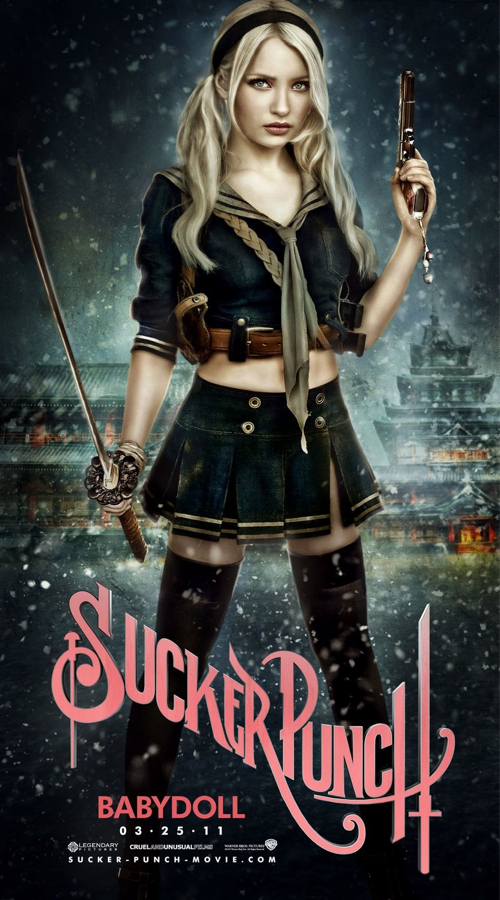
I hoped Suckerpunch was gonna be good. The trailer, to me, smacked of determined and passionate (albeit a bit simplistic and old-fashioned) feminism: a young girl is put into an insane asylum by her evil stepdad after her mum dies. To escape containment and lobotomy, the girl conjures up a battle field in her own imagination, and creatively “fights” her way out of through fantastical scenarios of war, guerrilla tactics and hand-to-hand fighting (at all three of which she kicks butt, as do the fellow female patients she includes in her escape place). The basic metaphor, I gathered, was something about the oppression of women by the evil and abusive institution of patriarchy that contains women through violence – but that women are able to “break free” through the creative power of their minds, and through banding together.

Of course, I saw problems with this metaphor – it positions all men as generically evil, and it suggests that a “freeing of the female mind” is enough to make women feel ok about the real violence and oppression they may have experienced (ie. you wouldn’t tell a rape victim to just fantasise about killing the rapist, and then assume her own trauma has been dealt with, or that “rape” as an issue in society has been removed). In any case: whatever misgivings I had about the trailer, I hoped they would dissipate through the course of film. THEY DIDN’T. (In fact, they grew and mutated in huge horrible monsters named Disbelief and Disgust).

The offending school uniform get up.
For one, the whole film was a shameless excuse to get hot chicks flashing as much butt-cheek and cleavage as possible. Babydoll (the main character) actually has two levels of escapist fantasy – apart from world of fighting in her mind, she imagines that the mental hospital is crazy burlesque brothel (!!?!) where young (underage?) fake-tanned girls strut around in corsets, fishnet tights and stilettos, each with their own electronic rotating bed. The creepy lobotomy doctor becomes a creepy pimp and the “fantasy world” of fighting that I saw in the trailer can only be accessed by Babydoll when she does a pornographic stripper dance. It is while she mesmerises everyone with her “moaning” and “gyrating” (as the other girls in the film describe) that she can distract the chief doctor (pimp), the psychologist (the madam) and guards so that the other female patients can steal a map, a key and some other objects that will help during their escape. To the film’s credit, we never actually see the notorious dance. However, equating female, imaginative freedom with self-objectification and sexualisation is totally problematic, and suggests girls can only really achieve freedom through showing their bodies (which will only work if their bodies are “good enough” to have power over men). Obviously this is no freedom at all, and I should have realised at this stage that the film probably wasn't intended as a contribution to contemporary gender politics. 

In any case, the scenes which depict the gunfights and explosions in Babydoll’s fantasyland feature the girls in revealing school-girl uniforms, encouraging some weird paedophilic voyeurism on the part of the audience. Also, Babydoll meets some random old guy in the fantasyland who gives her instructions about what objects she needs to escape. On the “real” level of the story, one of the female patients does escape, thanks to Babydoll, and when she gets out of the hospital and into the town, the same random old guy is the bus driver, who gives her a knowing wink and lets her ride the bus for free. Babydoll and this woman, then, are actually totally dependent on this guy for having achieved any level of freedom at all. And yet we never find out who the heck this guy is – he’s just another vague male white father figure with the appropriate knowledge on how a women should behave (!!!?!). I’m not saying that men and women shouldn’t work together – of course I think they should. Some might argues that as a Christian (ie follower of Christ) that I am complicit in such a narrative of a masculine archetype - but actually, Jesus’ own history and claims are extremely specific and gender inclusive, as opposed to  the film's presentation of some vague cultural idea of manhood which refuses to account for its origin, its influence, or where it gets the omniscience it claims as natural to itself.

Plus, the film made no sense narratively. How did the real girls get into the brothel fantasy? The film nowhere explained what the correspondence was between the real life of the girl and her fantasies – presumably they matched up somehow, but it wasn’t clear. Plus, the fight scenes sucked – talk about boring, and pornographic. As my good friend blogged here[Snyder, the director] could have considered the fact that us chicks would definitely not be impressed by seeing the same jump and twirl that conveniently exposes lots of creamy thigh five times in a row (and countless of other times over the course of the movie.) And for the love of all that is holy, where is the gore?

I’m going to hold it there, even though I could write another thousand words on many other aspects of badness into the film. MORAL OF THE STORY: filmmakers need to get out of the habit of writing films that position men as automatically having negative power and women automatically being on the defensive. How else will we move forward out of this thinking, to an ideology where men and women can work together on equal terms? I know I sound ranty. Soon I will find something I like and write a happy post :) To cheer you up, here is a shot from the hilarious scene in Wayne's World that inspired the name of this post, and exemplifies my feelings towards Suckerpunch. Love yas! 

Tuesday, April 5, 2011

I'd like to officially thank JAMES FRANCO

for confirming that I have become desensitized to gross gory stuff onscreen. 127 Hours was the best new film I've seen since The Fighter two weeks ago and I totes watched that arm get chopped off without even having to hide behind a cushion or my fingers or a Carebear. Thank goodness he's the one being touted as the dude to direct the film adaptation of Cormac's Blood Meridian...see here, here and here for the heresay concerning that one (which I HOPE IS TRUE).

I don't want to be too desensitized though. I still wana find bad stuff horrible. But I hope the feeling lasts till I see Blood Meridian (most violent book that anyone who's read it has ever read). Read summary here.

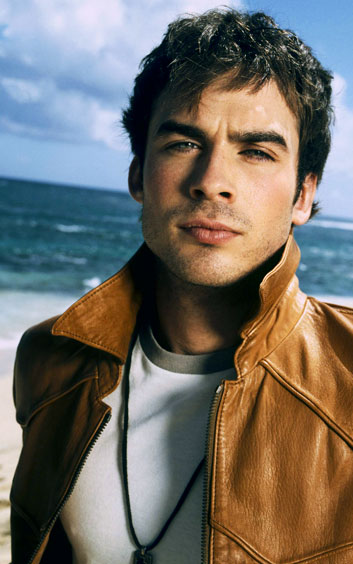
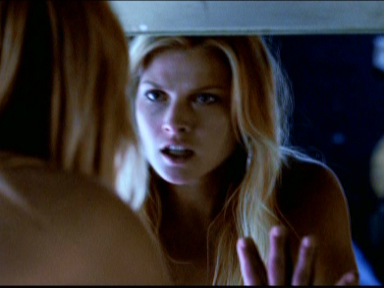
also I joined twitter and spent 90 mins this morning reading about ian somerhalder and eliza dushku and jessica alba. what a non-waste of my time!


Peace out!
coolio numero uno.

Coolios numeros dos, tres & cuatro.

Friday, April 1, 2011

HEROES we need more girl ones.

Well i'm sick as a dog but what really made things better was buying a set of cowgirl coasters this morning with my friend Deb after we had a coffee. Also we talked a lot about Supernatural and the weirdest TV characters we've been attracted to (both of us admitted they were aliens on badly scripted 90sTV shows which will remain nameless). But more importantly I was so sick last night that all I managed for dinner was a block of chocolate and some wine and THE LAST FOUR EPISODES OF HEROES SEASON 2. (This is going to be a really predictable post about why the representation of women really peed me off, btw. You can pretty much read the rest of my argument about this stuff HERE).

the male:female ratio is like so mid-20th century.
I mean seriously! here is how what started off good just went bad. All the chicks are kind of helpless and totally dependent on men to make decisions for them. Maya, for example, who can make everyone drop dead somehow while she's angry, cries all the time and gets really easily deceived by the bad Sylar. He doesn't even have to try, she just falls for his every word! Besides, totally annoying that she's the 'evil one' and she always needs some dude around to calm her down and stop her from killing people. Claire the cheerleader is probably the coolest. But even when she defies her deceitful father, she eventually believes that he was right in all the advice he ever gave her and that if she had only listened to him, everything would be alright - even though he totally lied to and manipulated her.

All Elle wants to do is make her Daddy proud of her, even though he tortured her as a child on the ground it would 'increase her powers' - except rather than enhance her own agency, she has just become his (and his company's) pawn in shady business which even Elle herself doesn't know the extent of! (Though at the end of the season she saved some people's lives, and they were grateful, and I got the impression she was starting to find a new sense of purpose in helping people, rather than just blindly doing what her dad says). I think the WORST scene possibly on TV during the past 5 years was where Noah and Bob (Claire and Elle's respective dads) take each other's daughter hostage and then trade them  with each other in exchange for peace. As if the trading and ownership of daughters was the way men negotiated peacefully. As if they were property to be exchanged! And the girls didnt even question it!!! (And it wasn't even peaceful - Elle got shot, and so did Noah). Not to mention Caitlyn, the lovely Irish girl who gets taken off to the future and left there; the Japanese Princess in the past who just shifts from male hero to male hero and looks pretty and then is left there; Noah's wife who nearly dies from the amount of memory removal he has subjected her to; and Matt's ex-wife who is written off as a lying and unfaithful wife. Moreover, it is the men on the show who remain the most powerful; who run the 'organisation' (and who run the coup to take the organisation down) men make all the big decisions about everyone else (including women); it is men who are always positioned as wanting to save the world or destroy it; it is women who are being   being neglected (Caitlyn and the Princess), seeking help for their problem (Nikki) or being lied to (Claire and Elle) but without any real chance (yet) of standing up for themselves or actually questioning the power dynamics of their world. 

Nicki's split personality kicks butt
Sure, it was pretty cool that Claire's blood is what can save everything. But it is because of that, that she remains an object to be protected and transacted - she becomes a resource. Why don't they take Adam or Peter's blood - those two guys have the same powers of regeneration?? No, those two are too busy doing more important things like destroying or saving the world or saving girls. Much easier to use up the cheerleader. I'm retaining my hopes for Nikki and Monica who are showing some promise. But they're still kind of positioned as emotionally unstable, despite their power. But Nikki is awesome - she is physically strong and beats up everyone, but still loves her son enough to sacrifice a lot for him. In fact Nikki is pretty good. So far she's been the best I think. Monica too, though haven't seen much of what she can do yet.  

As much as I loved the show, I felt pretty nauseated by the end of that season. Just sick of watching women fall back into some sort of dependency role when women and men should be taking on stuff like 'saving the world' (and whatever you might take that to mean metaphorically) TOGETHER. Action TV is still dominated by guys. thought things would've changed since Buffy but no, I guess I'll be watching Kill Bill again tonight to make up for it.

END RANT. I STILL LOVE HEROES BY THE WAY. 

PS If you're familiar with the show - I saw this japanese guy running really fast through the food court at Collins Place in melbourne with a poster tube slung over his back. Just sayin'. Time travel is probably for real.

Thursday, February 3, 2011

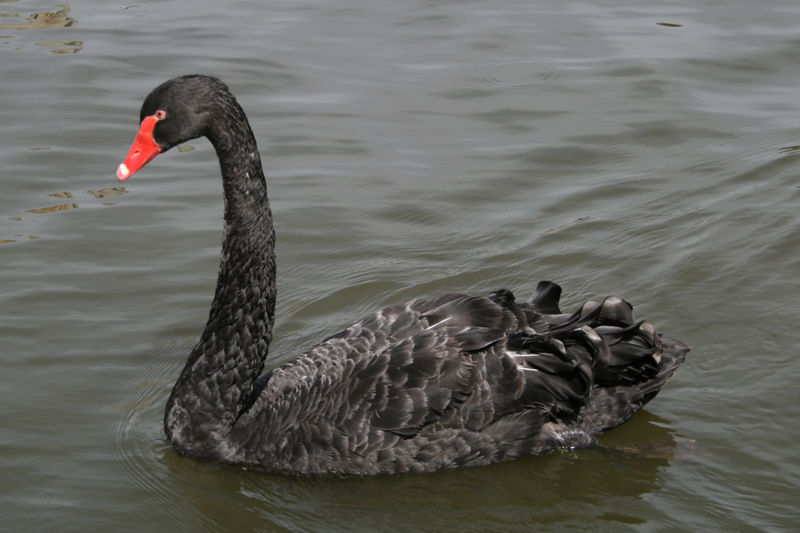
Fact: Black Swans are native to australia.

Naturally, this meant I had a total freak out after seeing Natalie Portman enact the psychotic episode that is her new film, Black Swan (dir. Darren Aronofsky). If you haven’t seen it, this post contains spoilers – not that that matters, because the story is based on Swan Lake, and even if it wasn’t, would be totally predictable anyway. Basically she’s a neurotic ballerina who has to play the Swan Queen in Swan Lake (both the black and white swan roles) and as the film progresses she becomes more and more entangled in a split personality disorder. She becomes violent and unpredictable, she can’t tell what is real or not and then ends up killing herself onstage in real life (just as the white swan kills herself after realizing her prince accidentally commits himself to the black swan).


Freak out! the black swan takes over. 
The tension of the film essentially lies in uncertainty around whether playing the split role caused her to become unwell, or whether her illess enabled her to perform the role so well. On the one hand, the film suggests she has a bunch of issues already (bulimia, a history of self-harm, crazy/repressed ballet mom who never got to “fulfil her career,” self-esteem issues, perfectionism, etc). On the other hand, the ballet industry seems to provide some impetus for triggering her mental illness: company director encourages the “dark side” of her to come out, by encouraging her to get sexual and trying to seduce her; rivalry with another dancer in the company spurs to fantasise about stabbing the girl to death (it is unclear for while though, whether Portman actually kills the girl or not), rivalry with the ex-prima ballerina who was booted so Portman could take the lead role (Portman then fantasises about this woman stabbing her face off with a nail file, though we don’t really know if it’s a fantasy or not). Etc. In the end, after receiving a standing ovation during the opening performance of Swan Lake, she jumps off the platform enacting the suicide of the ballet character, Odette – but simultaneously stabs herself in the gut and promptly dies. Curtain close. End film. Leave cinema feeling depressed and nauseated.

While Portman did give a stellar performance, and while Aronofsky did an effective job of getting the audience to feel as freaked out and confused as Portman’s character about what is real or not, there are some reasons why I REALLY DID NOT appreciate this film.

1. Gratuitously violent. The film is majourously gruesome with scenes of Portman imagining (or does she actually do it?) ripping her own fingernails out, peeling strips of skin from her arms and scratching the skin from her back. While this is not necessarily bad, it lent the film a horror-element which detracted from the psychological tension which was a lot more effective. The gory bits seemed thrown in to add some shock-factor, but were never really explored. At best they seemed a metaphor for the way that ballet/neuroticism was ripping her to shreds, (which in itself isn’t great as it reduces ballet to an awful metaphor, and fails to acknowledge the complexity around why people begin self-harming in the first place) and at worst, a cheap and nasty way of making a psychological thriller just that extra bit more nightmarish.

2. Based on a bunch of clichés. Portman’s “issues” that I mentioned earlier seem really extreme, and at the same time underdeveloped. Her eating disorder and relationship with her mother are not really investigated and the film seems to presume that the audience will fill this underdevelopment with stereotypes about the ballet industry. Plus – the misogynist ballet director, the sexy ballet-rival and the bitter-ex-prima-ballerina are worn out tropes that we have seen a gazillion times before. Plus, when Portman starts delving into her “dark side”, she does it to the max – goes out gets wasted, takes drugs, sleeps with some dude in the toilets, then has lesbian fantasy about rival-ballerina. I mean, what??!? It’s like they took every deviant act they could imagine and had her do it one night. (Plus, the positioning of her lesbian fantasy with the attractive rival as deviant seemed a) a failure to engage with gay relationships meaningfully and b) a cheap excuse to get attractive actresses naked).

How does such a pretty bird inspire such dread?
3. Glorifies suicide and offers no hope. While the film is clearly a tragedy, it offers NO HOPE. There is no empathy in the portrayal of Portman’s character, no pity for her plight: it basically says, if you’re crazy, there's no way out, you’ll wreck your own life and everyone else’s. Then she gets applauded as she kills herself – as if her real life death makes her great performance worth it. There is no questioning of how to deal with issues, and, due to all the clichés, no real accounting for why she might be the way she is. The film seems to blame ballet for all that goes wrong – but also seems to blame her own circumstances. Even the scenes of the actual dancing are limited, which means the audience don’t really get a sense of why Portman’s character would have invested so much of herself in it. Is it coz she wants fame? Money? Because she loves dancing? We don’t know.

Aronofsky is the master of gore and shock-factor, and though I never want to watch Requiem For a Dream again and wish I could erase most of it from my mind, at least that film demonstrated the consequences of a drug-lifestyle, how consumerism and capitalism destroy lives beyond repair, and the rampant sexism still occurring in a so-called post-feminist world. Black Swan, however, is problematic because it sets itself up to be a ballet film, but one that dishonours the ballet tradtion by filling it with a bunch of clichés; it sets itself up to be a psychological thriller, but  detracts from its tension with its schlock-horror-ness; it sets itself up to be a portrayal of mental illness, but portrays such illness unsympathetically with no real accounting for its cause or consequence. Apparently though, everyone else in the world loves it and it's raking in billions of box office dollars by the day. 

In any case, just to drag feminism into the mix, at least Portman has noted that it was unusual for a man to direct a film centering on female psychology, and that having more female Hollywood directors is something the industry we should aspire to. Read interview here.